

MKR SCAFFOLDING

Rubbish Chute Hire London

Roof strips and internal soft strips generate waste fast, and carrying it down by hand slows the job and puts workers on stairs and ladders they do not need to be on. MKR supplies and rigs rubbish chutes, or rubble chutes depending on your trade, to the scaffold, moving debris straight from the work area to a skip at ground level, with tie provision designed in from the start.

Understanding Rubbish Chutes

A rubbish chute, sometimes called a rubble chute, is a series of interlocking sections hung and tied to a scaffold, running from a hopper at the working level down to a skip or collection point at ground level. Waste goes in at the top and comes out at the bottom, rather than being carried down a ladder or staircase, bag by bag, floor by floor.

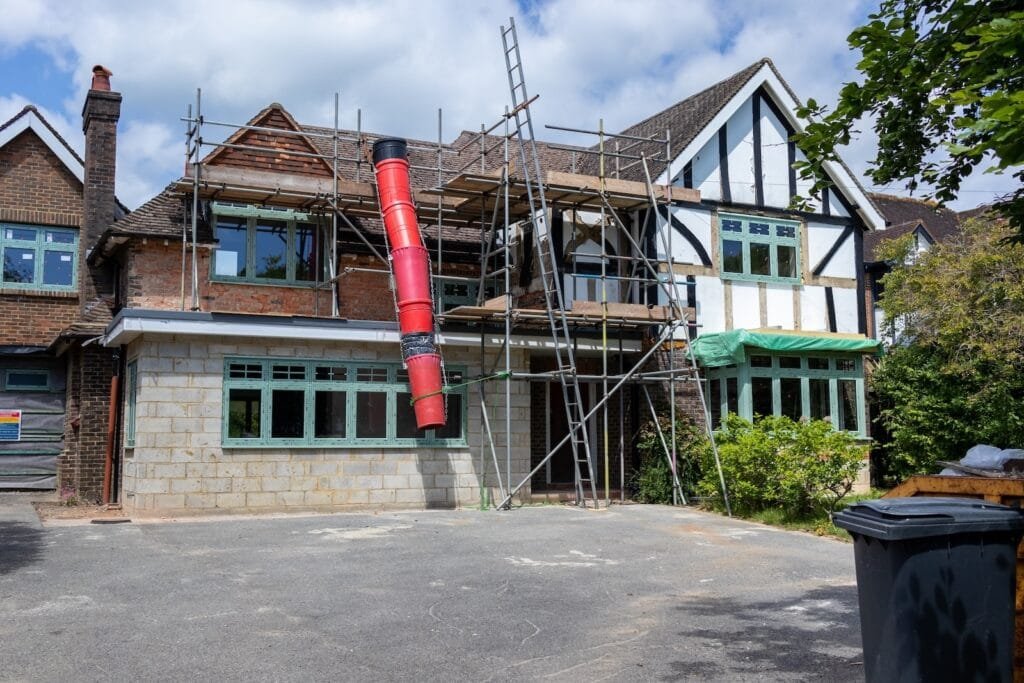
Rubbish chute fixed to scaffolding on a house during refurbishment
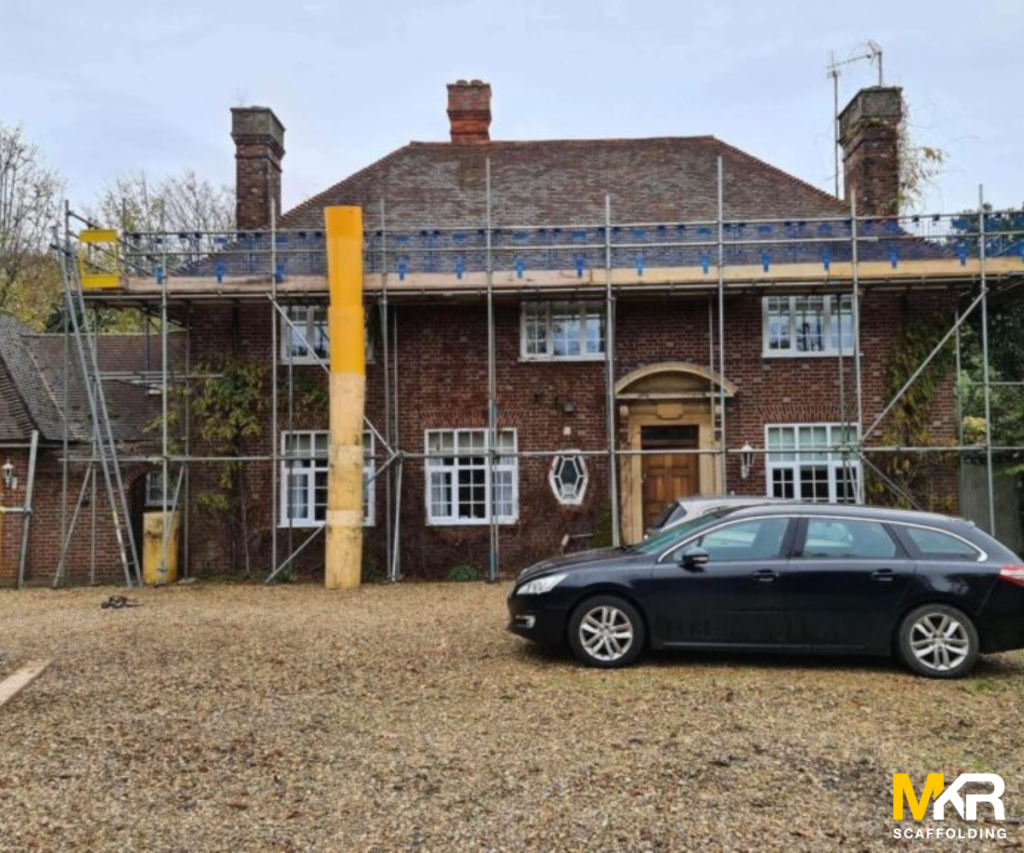
Rubbish chute running down a scaffold on a brick house

Side entry sections let workers feed waste in at intermediate lifts as well as at the top, which matters on a multi-storey strip out where debris is generated on several floors at once rather than just at roof level. Each section ties into the scaffold to manage the chute’s weight and swing as it fills, and is checked at each level as the chute goes up.

At the bottom, the chute discharges into a positioned skip, usually covered to reduce dust and prevent material from scattering on discharge. Getting the skip position and discharge height right at the planning stage avoids problems once the chute is in daily use, and keeps waste removal running alongside the work rather than stopping it every time a skip needs clearing.

MKR SCAFFOLDING

YOUR LOCAL RUBBISH CHUTE HIRE SERVICES

Why You Need a Rubbish Chute

Moving roof strip or soft strip waste down a ladder or staircase by hand ties up labour that should be spent on the job itself, and loading workers up with debris on stairs is a manual handling risk most sites could do without. A chute clears that same volume in a fraction of the time, straight into a skip rather than through the building, freeing the crew to keep working rather than carrying.

Dust and noise matter more on residential streets than most contractors admit, and a well-managed chute with a covered skip does more to keep neighbours onside than almost anything else on site. A site that looks chaotic from the pavement creates complaints regardless of how the work itself is progressing, and those complaints land on the site manager’s desk rather than the scaffolder’s.

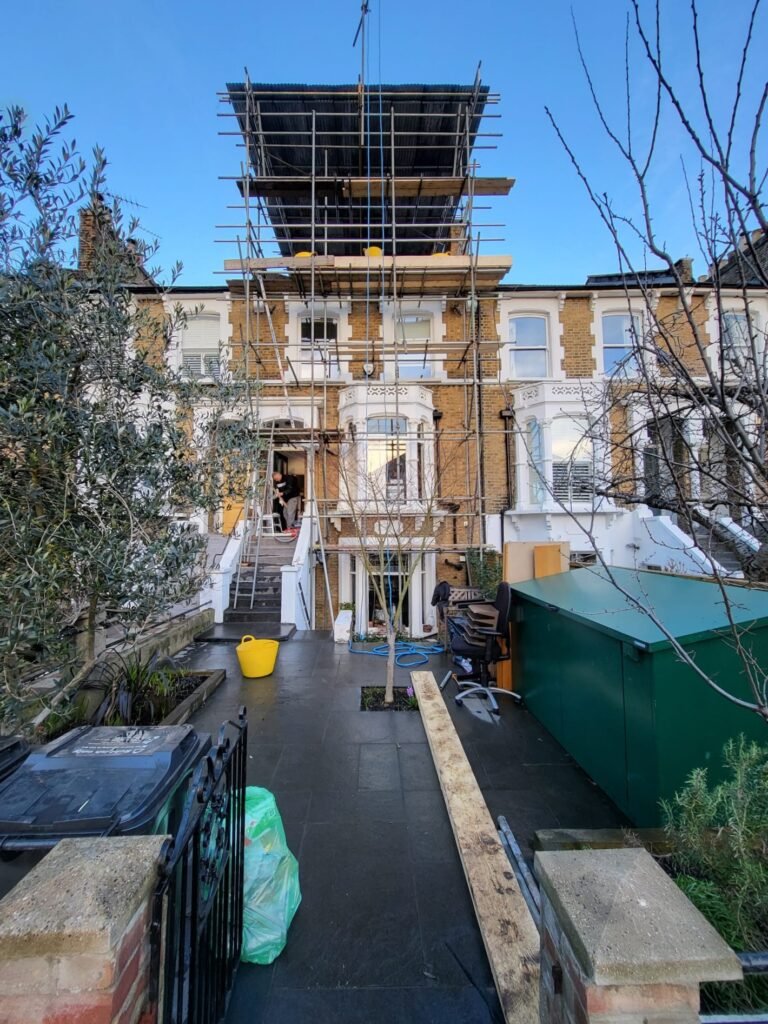
Scaffold erected on a Victorian terrace with a working platform at roof level

Chutes are rigged to the scaffold itself, typically kwikstage scaffolding on strip out and refurbishment jobs, with tie provisions calculated for the chute’s weight and swing once it is loaded, rather than treated as an afterthought bolted on at the end. Getting this right at the design stage is what keeps the chute stable once it is full and in daily use.

Keeping the site and surrounding area clear of debris is a CDM 2015 duty as much as it is good housekeeping, and the Work at Height Regulations 2005 cover the tie provision and the loading a chute puts on the scaffold itself. A properly rigged chute is one of the more straightforward ways to meet both obligations on a job generating constant waste.

It also reduces how often a skip wagon needs to turn up, since debris leaves the building steadily through the chute rather than piling up until someone carries a full load down. On a residential street with limited space for vehicles, fewer, better-timed collections make the whole job easier to manage and reduce the number of wagons blocking the road outside.

Hire runs for as long as the job needs it, from a short strip out to a longer refurbishment programme, with sections added or removed as the work moves between floors. That flexibility matters more than a fixed installation, since most strip out and refurbishment programmes do not generate waste at a constant rate from start to finish.

OUR RUBBISH CHUTE HIRE SERVICE

Chute supply and rigging to the scaffold

Chute sections and entry points at the lifts you need

Tie provision for chute weight and swing

Discharge point planned around your skip position

Inspection through the hire period

De rig and collection on completion

SCAFFOLDING SECTORS

Contact MKR For Reliable Rubbish Chute Hire

MKR scaffolders are CISRS carded, and every chute installation is tied into the scaffold in accordance with TG20:24 operational guidance, with tie provision calculated for the loaded weight and swing of the chute rather than assumed. We carry £15 million public liability cover on every contract, including chute hire, and inspect ties and fixings throughout the hire period rather than only at the start and finish.

If your scaffold also needs safer access for the crew moving material to the chute, our scaffolding towers and stairs option is worth considering alongside a ladder bay, particularly on a job with heavy daily foot traffic between floors. This keeps people and material moving on separate, purpose-built routes rather than sharing a single access point.

If you are a roofing contractor, strip out crew or refurbishment team planning waste removal for an upcoming job, get in touch and we will confirm chute type, skip arrangement and timing alongside your scaffold, with de rig and collection built into the programme from the outset.

MKR SCAFFOLDING

Our range of comprehensive scaffolding services includes:

LONDON SCAFFOLDING HIRE COMPANY NEAR YOU

Top scaffolding company for commercial and residential scaffolding in London, MKR Scaffolding offers scaffold hire services throughout all regions of the UK’s capital and surrounding areas.

Our service areas include, but are not limited to:

City of London, East London, South East London, South West London, North London, North West London and West London.

REVIEWS

What Our Costumers Say:

Request a Quote

Ready to Work Together? Build a project with us!
 

Learn More From

Rubbish Chute Hire: FAQs

The chute sections are hung and tied directly to the scaffold structure, with tie provision calculated for the weight and swing of a loaded chute rather than an empty one. This is worked into the scaffold design from the outset, so the ties going in at erection already account for the chute rather than being added as an afterthought later, and we can supply the tie calculations on request.

Yes, the chute discharges into a positioned skip at ground level, usually covered to control dust and stop material scattering as it comes out. We can advise on skip positioning as part of the chute design, though arranging the skip itself is confirmed with you at the quote stage depending on what your site already has in place and who is managing waste collection on the job.

Less than carrying debris down by hand floor by floor, though some dust is unavoidable on any strip out regardless of how waste leaves the building. A covered skip at the discharge point and sensible housekeeping around the chute base keep it manageable, which matters for neighbours on a residential street as much as for site cleanliness, particularly on a job running for several weeks.

In most cases, yes, provided the existing scaffold can take the additional ties a loaded chute requires. We check the original scaffold design before confirming this, since not every structure is rated to carry a chute if it was not accounted for when the scaffold was first put up, and some scaffolds need extra ties added before a chute can be installed safely.