

MKR SCAFFOLDING
Scaffold Sheeting and Netting
What is Scaffold Sheeting and Netting?
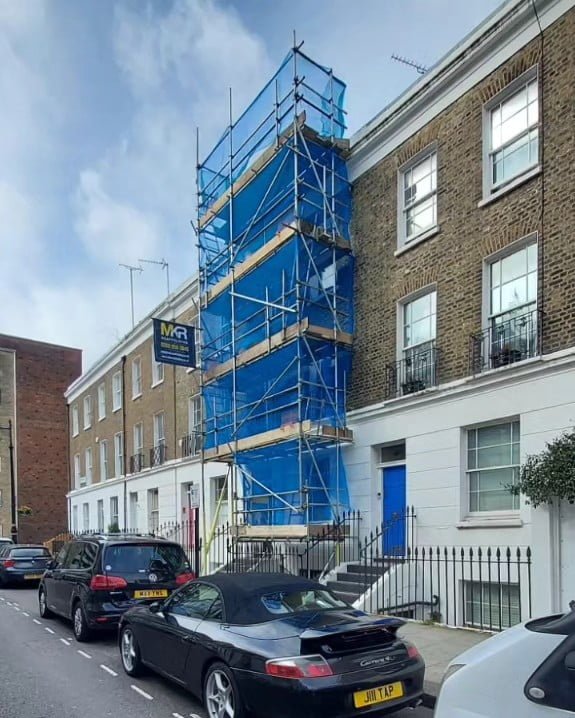
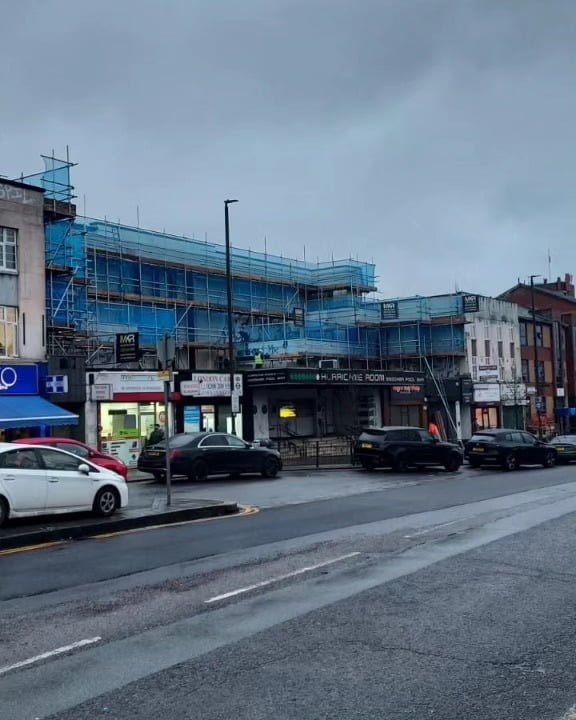
Scaffold sheeting and debris netting are protective coverings fixed to the outside of a scaffold. Netting is a woven mesh that traps dust and falling debris inside the structure while still allowing air to pass through. Sheeting is a solid reinforced membrane that seals the elevation and keeps wind and rain off the work behind it.
Both are fitted to the standards and ledgers as the scaffold goes up, or retrofitted to an already-standing structure. The choice comes down to what the job needs: containment on a busy street, dust control during cutting and grinding, or full weather protection so trades can keep working through a wet spell.
MKR SCAFFOLDING
YOUR LOCAL SCAFFOLD SHEETING Service
Why You Need Scaffold Sheeting and Netting
Open scaffolds let dust and debris escape onto pavements, neighbouring gardens, and parked cars. Debris netting holds it inside the structure. Where the public passes close to the scaffold, that containment forms part of the CDM 2015 duty to protect people who are not working on the site.
Reinforced sheeting earns its place when the weather is at risk. It keeps render, paint, and timber dry, holds heat in during winter works, and stops a wet spell from stalling the programme. Sheeting increases the wind load on a scaffold, so it needs to be accounted for in the design from the outset rather than added afterwards.
OUR EMERGENCY SCAFFOLDING SERVICE
Debris netting to full elevations
Reinforced weather sheeting
Wind load assessment and additional ties
Sheeting to temporary roofs and hoardings
Post storm checks and refixing
Removal and disposal at strike
SCAFFOLDING SECTORS
Contact MKR For Reliable SHEETING AND NETTING
MKR Scaffolding fits sheeting and netting as part of the scaffold, not as a separate add-on. Our CISRS carded teams install the covering as the structure goes up, or retrofit it to an existing scaffold once the tie provision has been checked. We carry £15 million public liability cover.
A sheeted scaffold carries a different wind load, so the covering is planned alongside the scaffold erection itself rather than treated as a separate job.
For larger or exposed elevations, our scaffolding design service formally determines the tie pattern and loadings.
Call 0208 050 2845 with your site details for a free quote.
MKR SCAFFOLDING
Our range of comprehensive scaffolding services includes:
Loft Conversion Scaffolding
Scaffold sheeting and netting
Contact us for a FREE QUOTE: 0208 050 2845
LONDON SCAFFOLDING HIRE COMPANY NEAR YOU
Top scaffolding company for commercial and residential scaffolding in London, MKR Scaffolding offers scaffold hire services throughout all regions of the UK’s capital and surrounding areas.
Our service areas include, but are not limited to:
City of London, East London, South East London, South West London, North London, North West London and West London.
REVIEWS
What Our Costumers Say:
Request a Quote
Learn More From
Scaffold Sheeting and Netting: FAQs
What is the difference between scaffold sheeting and debris netting?
Netting is a woven mesh that traps dust and falling debris while allowing air to pass through. Sheeting is a solid reinforced membrane that seals the elevation and keeps out wind and rain. Netting is the usual choice where the concern is protecting people and property below. Sheeting is used when the work behind needs a dry, sheltered environment, such as rendering, painting, or timber repairs.
Does sheeting affect the scaffold structure?
Yes, considerably. An open scaffold lets wind pass through it, while a sheeted one behaves more like a sail and transfers much higher loads into the ties and the building. TG20:24 sets out how sheeted and netted scaffolds should be configured, which usually means more ties. This is why sheeting should never be added to an existing scaffold without first checking the structure.
Can netting or sheeting be fitted to a scaffold already up?
Often, yes, but only after the structure has been assessed. A tie pattern that was adequate for an open scaffold may not be adequate once the elevation is covered. We will inspect the scaffold, confirm how the covering affects the wind load, and fit additional ties where needed before any material goes on.
Does sheeting keep dust off neighbouring properties?
Netting contains most of the falling debris and coarse dust, and sheeting goes further by sealing the scaffold face almost completely. Neither is airtight, so for work that generates heavy fine dust, such as grinding or render removal, we would recommend sheeting alongside on-site suppression measures. It makes a real difference to complaints on tight residential streets.